How to Work with London Suppliers for Corporate Events
From conferences to awards dinners, master supplier management for corporate events in London, and understand when an all-in-one venue is the better choice.
Planning your company’s next corporate event is probably one of many projects on your to-do list. Whether you sit in marketing, HR, operations, or even in-house event management, you may be balancing campaigns, stakeholders, budgets and internal priorities, while also being asked to deliver a conference, awards dinner or product launch that reflects your brand and drives commercial outcomes. One of the biggest challenges in delivering this is coordinating London suppliers.
Working with multiple businesses to deliver standout corporate events demands organisation, clarity and confidence. When every partner understands your objectives and their role within them, your event is far more likely to succeed.
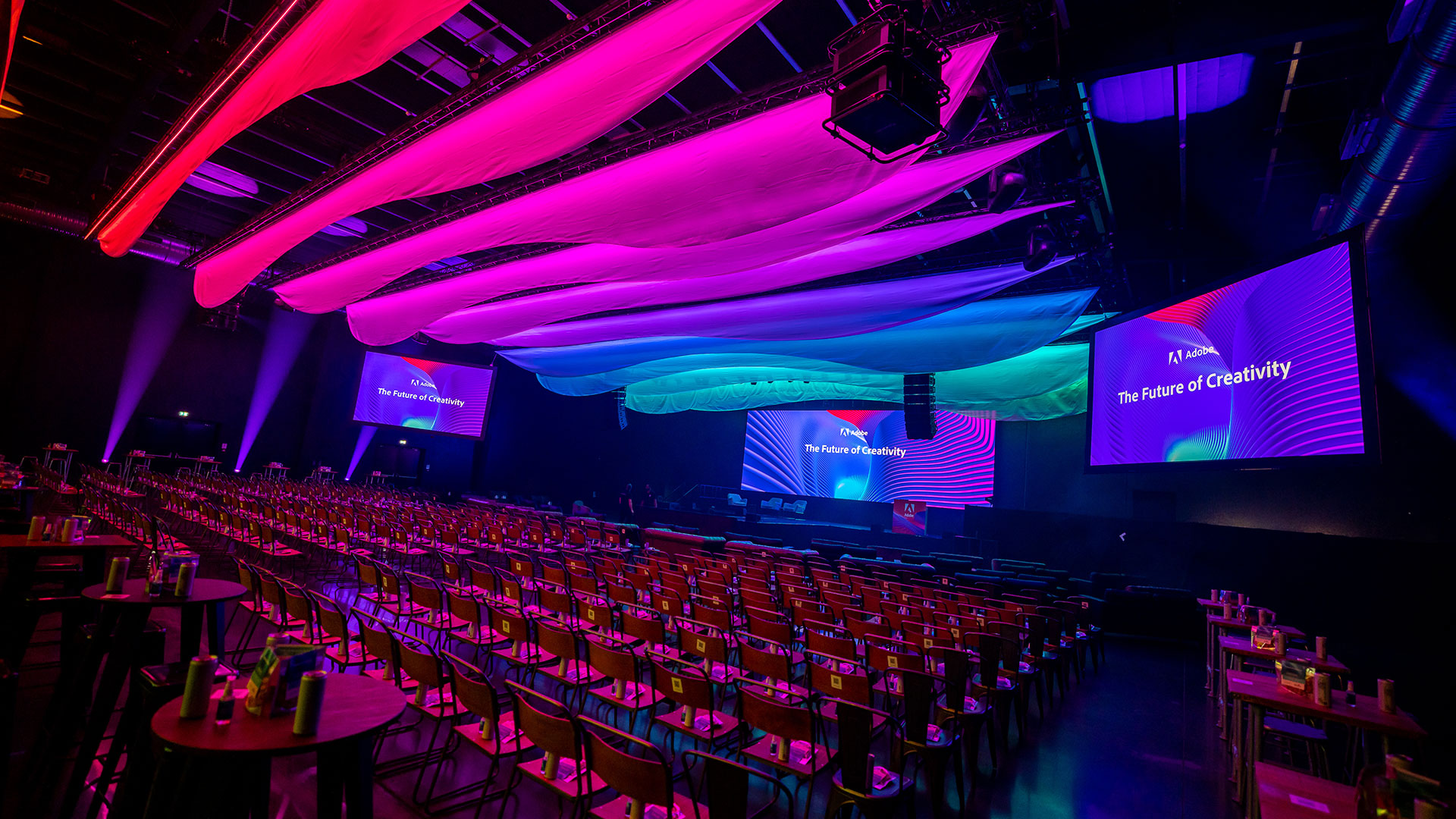
In this guide, we’ll explore how to manage London suppliers effectively, and how choosing a fully integrated venue, such as Evolution London, can simplify the entire process, giving you space to focus on your event vision rather than the moving parts.
Supplier management for corporate events
Corporate events are complex ecosystems. You have the venue, catering, production, staging, branding, entertainment, security, registration technology, and each element must align to create one seamless experience.
In our experience, when suppliers operate in isolation, problems arise. You may find that timelines clash, or technical limitations surface too late, and the budgets creep. For a truly successful corporate event, you need suppliers to collaborate with you and each other.
Strong supplier management protects:
- Your event objectives
- Your budget
- Your internal reputation
- Your brand perception
- Your guest experience
For London corporate events in particular, where expectations are high, logistics are challenging, and scale can be ambitious, supplier coordination is everything.
Independent suppliers or integrated partnerships?
There are two primary ways to manage suppliers for corporate events. Both can deliver exceptional results when handled correctly, and the key is understanding what each requires.
Option one: Manage multiple independent suppliers
This route gives you maximum control over every aspect of your event. You select each partner individually, negotiate contracts separately and shape every detail yourself.
For some events, this flexibility is valuable. You may have preferred caterers, specialist production teams or long-standing relationships you want to maintain.
However, this approach to event management demands careful orchestration. You will need to:
- Align contracts and insurance across multiple suppliers
- Coordinate technical specifications between production and the venue
- Manage supplier access times and load-in logistics
- Establish a unified event timeline
- Mediate between teams if expectations differ
- Take ownership of contingency planning
The more ambitious your corporate event, from large-scale conferences to awards dinners, the more complex this coordination becomes, which means the risk of miscommunication and something going wrong increases.
Option two: Choose a venue with established supplier partnerships
The alternative is to select a venue that already collaborates with trusted partners. This model removes layers of coordination from your hands while preserving creative freedom.
For example, at Evolution London, catering is delivered by Moving Venue and production by Encore. These partnerships are operationally aligned and regularly tested at scale.
What does that mean for you?
- Technical requirements are understood before design begins
- Catering and production timelines are easily coordinated
- Access, power and rigging are pre-planned
- Teams communicate seamlessly onsite
- Accountability is clear
Rather than managing separate conversations, you work with an integrated team that already understands the venue’s capabilities and has delivered hundreds of events in the space.
Not only is this less of a headache for you, but it also massively enhances creativity. By removing ambiguity about what’s possible, you can transform a blank canvas into something uniquely yours.
Where to start: define your objectives
Every successful corporate event begins with one question: What does success look like?
Is your conference designed to generate a sales pipeline? Is your awards dinner about internal recognition and morale? Is your product launch intended to reposition your brand? For most corporate events in London, delivering a return on your event investment is crucial. When your objectives are clear, suppliers can align their expertise and recommendations accordingly.
For example:
- Production can design staging that reinforces your tone and branding
- Catering can reflect event positioning through menu design
- Space planning can support networking or knowledge-sharing goals
- Branding can be introduced strategically to enhance guest flow
Without defined objectives, suppliers might default to a generic design based on assumptions.
Before engaging any partner, document:
- Your primary and secondary goals
- Target audience profile
- Guest numbers
- Budget parameters
- Key stakeholders and decision-makers
Taking the time to clarify your thoughts at this stage will prevent financial and time implications.
Create one unified brief for all corporate event suppliers
Even when working with multiple London suppliers, your event should maintain a cohesive feel. Develop a single, structured brief that you share across all partners. This ensures your vision is consistently communicated and eliminates conflicting interpretations.
Your brief should include:
- Event overview and purpose
- Guest demographic and expectations
- Brand guidelines and tone
- Key timings and milestones
- Technical requirements
- Catering style and format
- Sustainability considerations
- Success metrics
If every supplier works from the same document, they will be better aligned from the get-go.
In integrated venues such as Evolution London, this process is more efficient. Our teams collaborate internally to refine your brief into a deliverable plan, ensuring production, catering and spatial design evolve together rather than separately.

Align early on logistics and technical feasibility
Particularly in London, many challenges in corporate events arise from logistics. London venues vary in access windows, rigging points, ceiling heights, power capacity and noise restrictions. Production and other teams need to understand these constraints before concepts are finalised.
Early alignment prevents scenarios such as:
- Stage designs that exceed load limits
- AV concepts that require an unavailable power supply
- Catering layouts which work with building restraints (i.e. fryers, candles, etc.)
- Registration desks positioned without sufficient space
- Issues with event compliance, especially for listed venues
At Evolution London, our purpose-built structure offers unrivalled flexibility for large-scale corporate events. High ceilings, extensive rigging capacity and adaptable layouts provide the freedom to transform the space without compromise.
Establish roles, timelines and communication channels
Early on, decide and communicate who is responsible for what. Who signs off budgets? Who owns the master run sheet? Who communicates changes to suppliers? Who manages rehearsals?
Create a structured communication plan that includes:
- Regular planning calls
- Centralised document sharing
- Named points of contact
- Agreed response times
For larger events, a single event lead or project manager is essential. This person maintains oversight and ensures no detail slips through.
When working with an integrated venue team, much of this coordination happens behind the scenes, which reduces pressure on internal marketing or HR teams, especially when event planning is only part of your role. You’ll be assigned an account manager who will be with you every step of the way. From tastings to site visits and AV meetings, plus connecting you with preferred suppliers for branding/signage, furniture, etc.
Build rehearsal and contingency into your plan
For conferences, exhibitions, awards dinners and product launches, schedule technical rehearsals and full run-throughs where possible. This allows speakers to test staging, production teams to refine transitions, and lighting to be adjusted precisely.
Equally important is contingency planning.
Prepare for:
- Microphone and tech failures
- Limits in power supply
- Speaker delays
- Dietary requirement changes
- Weather disruption for external elements
A venue experienced in delivering high-profile corporate events will anticipate these scenarios proactively. At Evolution London, contingency planning forms part of our operational framework, ensuring your event proceeds smoothly even if circumstances change.
Common pitfalls in corporate events supplier management
Even experienced London planners encounter challenges in planning and running corporate events. Here are some of the common pitfalls to be aware of:
- Last-minute changes without supplier alignment
- Underestimating load-in and build time
- Assuming suppliers will coordinate independently
- Budget overspend due to unclear scope
- Overlooking branding opportunities within the space
- Failing to brief suppliers on audience expectations
Integrated venue partnerships reduce the chances of these happening because teams are already accustomed to working together and within the event space.
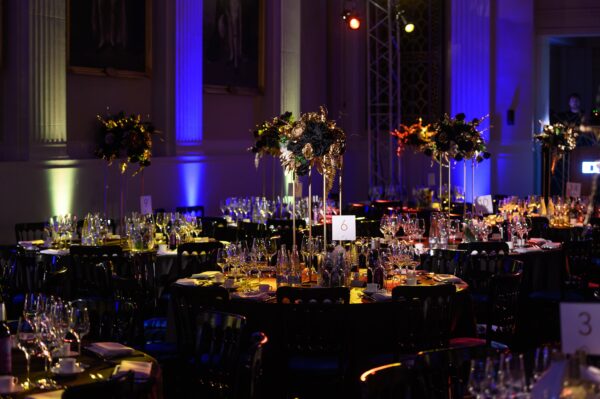
Why an integrated venue is the right choice
Managing independent suppliers can work wonderfully when time, expertise and internal resources allow. However, an integrated venue approach is often the best choice when:
- You are planning at scale (500+ guests)
- Production values are a high priority
- You’re facing stakeholder scrutiny
- Your internal resource is limited
- You’re juggling multiple roles or projects
Evolution London offers a blank canvas within Battersea Park, purpose-built for ambitious corporate events. From conferences and exhibitions to charity events and brand experiences, the space adapts to your vision.
With Moving Venue delivering exceptional catering and Encore leading production, your event benefits from teams who understand the space intimately. Rather than coordinating separate suppliers, you collaborate with one cohesive team working together on your objectives.
Corporate events supplier checklist
Before signing contracts:
- Confirm capacity and layout flexibility
- Review technical specifications
- Clarify exclusivity agreements
- Confirm cancellation and payment terms
- Request full cost breakdown
During planning:
- Share a unified event brief
- Schedule technical walkthroughs
- Finalise run sheets and production schedules
- Confirm catering logistics, finalise menu, and attend a tasting
- See the venue in action if possible
- Align on branding placement
Before event day:
- Confirm arrival and load-in times
- Review contingency plans
- Conduct final production rehearsal
- Share emergency contacts
- Circulate final guest numbers and dietaries
This may all seem like a lot of work – and it is! But structure and planning are key to success.
Deliver corporate events with confidence
Corporate events are powerful business tools. They build culture, launch ideas, strengthen partnerships and shape brand perception. Managing suppliers effectively is what turns your grand ambitions into reality and ensures your event delivers on your objectives.
With clear objectives, unified briefs and structured communication, independent supplier models can succeed. Yet for many London-based marketing and HR teams, the simplicity and experience of an integrated venue gives unbeatable reassurance.
At Evolution London, our team works with you from conception to execution. We combine flexible space, established supplier partnerships and operational expertise to deliver events that feel seamless.
Whether you are hosting a conference, an immersive product launch or a prestigious awards dinner, your vision deserves a venue and team capable of transforming it into something extraordinary.