Measuring ROI in London Corporate Events
Measure ROI for corporate events London teams can justify. Learn how to plan, track, and prove business impact from conferences, launches, and internal events.
Hosting corporate events in London requires a significant investment of budget, time, and internal resources. Whether you are planning a conference, awards dinner, offsite celebration, or product launch, the expectation is clear: the event must support wider business goals and deliver tangible value. For marketing, HR, and events teams, this often means answering a difficult question: What did the business actually gain?
Senior stakeholders want clarity on outcomes, not just attendance figures or positive feedback. This means measuring ROI on corporate events in London is essential to proving success.
The good news is that with the right planning, structure, and data, corporate events can become a powerful driver of growth, engagement, and long-term value. In this guide, we explore how to design, deliver, and measure corporate events that organisations can confidently stand behind.
Redefining ROI for corporate events in London
ROI in the context of corporate events extends well beyond ticket sales or immediate revenue. While fast financial return is critical, many of the most valuable outcomes are influenced during events, rather than closed directly on the day.
For external-facing events, ROI often includes:
- Pipeline progression
- Deal acceleration
- Customer retention
- Brand positioning
For internal events, it may be reflected in employee engagement, retention, productivity, or cultural alignment. The key is to define what success looks like before planning begins, so your event is designed with purpose rather than retrospectively justified.
Corporate event types that deliver measurable value
Different event types lend themselves to different outcomes. Understanding this upfront allows you to select experiences that genuinely support your objectives.
External events drive commercial ROI
Events focused on clients, prospects, and partners often deliver the strongest commercial return when they prioritise interaction over scale. Formats that consistently perform well include:
- Executive roundtables and large-scale dinners designed to deepen relationships
- Thought leadership conferences that position your brand as a market authority
- Product launches that create momentum and urgency around new offerings
- Client appreciation events that reinforce loyalty and renewal conversations
These formats work because they move relationships forward. They create space for meaningful conversation, shared experience, and trust, all key factors in long sales cycles.
Internal events support engagement and performance
Internal corporate events are equally important when ROI is viewed through a people lens. Off-site company celebrations, sales kick-offs, training programs, and awards ceremonies all contribute to morale, alignment, and productivity when delivered with intention.
The most effective internal events are positioned as part of a wider employee experience strategy, with clear outcomes linked to engagement, retention, or performance metrics.

Planning corporate events in London
Before you shortlist venues or brief suppliers, it’s vital to define the commercial or organisational outcome you want to achieve and get all your stakeholders on board.
Ask yourself what should change after the event. Should prospects move closer to a buying decision? Should customers feel more invested in your brand? Should employees return to work more motivated or informed?
From here, the event can be designed backwards. Sales, marketing, and leadership teams should be involved early to ensure alignment between the event experience and follow-up activity.
When planned this way, corporate events are part of a wider strategy, rather than isolated experiences or cost centres.
Selecting London corporate event venues
Your chosen London event venue plays a critical role in shaping outcomes. Beyond capacity and location, the most effective venues enable flexibility, branding, and interaction, factors that directly influence ROI.
High-ROI venues offer blank canvas spaces that can be transformed to reflect your brand, your message, and your objectives. They support seamless production, immersive environments, and data capture without compromising guest experience.
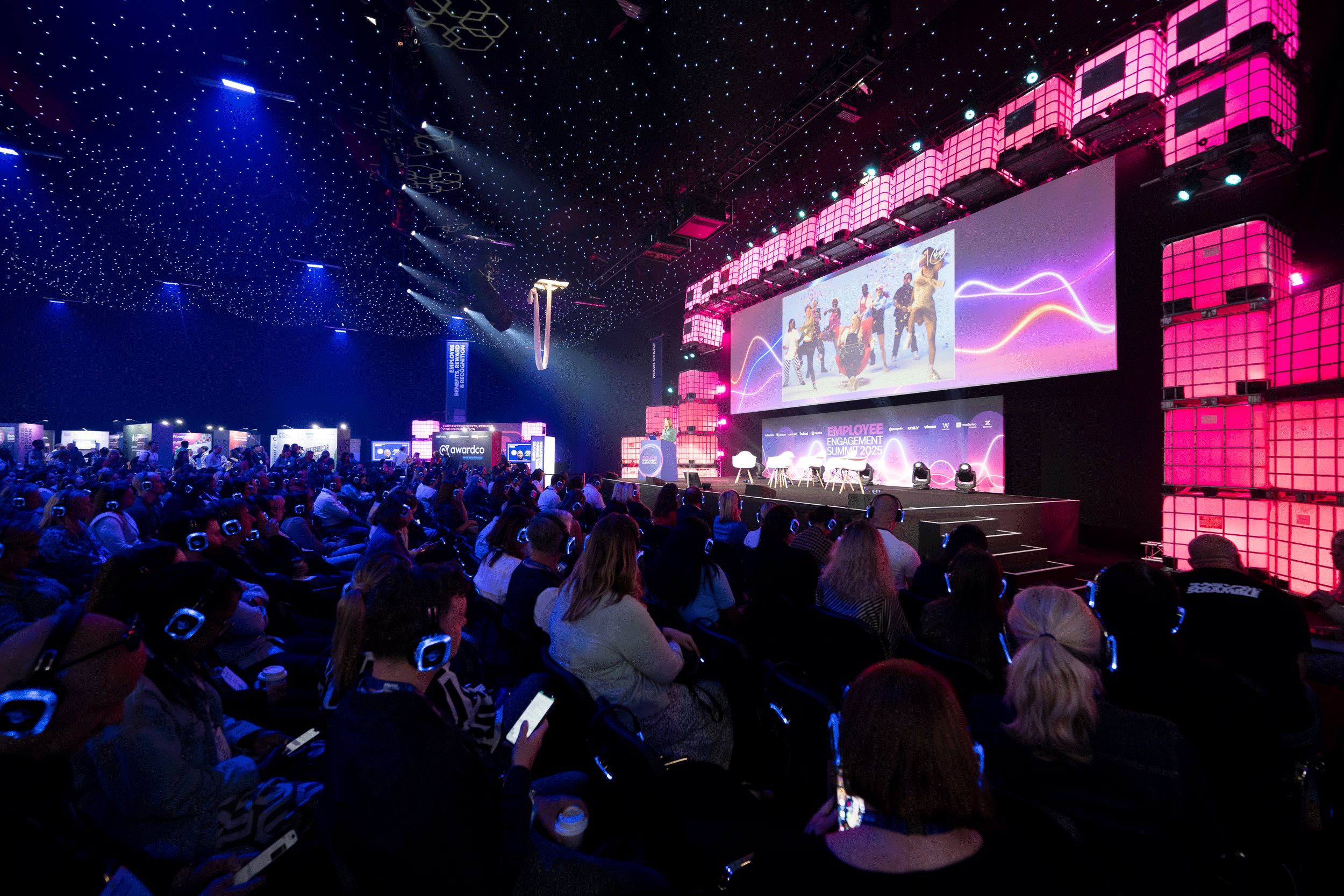
A venue such as Evolution London exemplifies this approach. Located within Battersea Park, our purpose-built space offers scale, adaptability, unrivalled branding potential, and 24-hour access, allowing you to create on-brand conferences, exhibitions, and celebrations without restrictions (unlike historical buildings with regulations).
When your venue supports your vision, rather than limiting it, you gain the freedom to design experiences that encourage connection, conversation, and conversion.

Event formats for employee engagement
When London teams organise internal corporate events, they’re often scrutinised for return on investment. Sometimes, these metrics can feel ‘fluffy’, but engagement and productivity are no longer abstract concepts; they are measurable outcomes with real cost implications.
Events that focus on recognition, collaboration, and development tend to deliver the strongest internal ROI. Awards ceremonies reinforce culture and appreciation. Offsites create space for strategic thinking and alignment. Training events build confidence and capability that translate directly into performance.
Measuring ROI here requires a longer-term view. Employee surveys, retention data, performance metrics, and participation rates all contribute to understanding the impact.
How to track ROI for corporate events
Good ROI measurement starts before your event happens. First, establish a baseline that allows you to demonstrate change rather than rely on anecdotal feedback.
Pre-event metrics
Depending on your objectives, this may include pipeline value, engagement scores, employee sentiment, or sales-qualified leads. These benchmarks provide context for post-event analysis.
Metrics during the event
Attendance rates, session participation, networking activity, and engagement levels offer insight into how well the experience resonated. For external events, tracking conversations, meeting requests, or intent signals is particularly valuable.
Post-event metrics
After the event, focus on outcomes rather than outputs. This may include leads generated or influenced, deals progressed, renewals discussed, or changes in employee engagement. The most meaningful ROI stories can emerge weeks or months later, as relationships mature.

Measuring ROI at London conferences and seminars
For larger-scale corporate events such as conferences or seminars, consistent metrics help standardise reporting and improve future performance. Common measures include:
- Cost per attendee or delegate
- Cost per lead or opportunity influenced
- Pipeline value attributed to the event
- Conversion rates from attendees to meetings or sales
- Engagement and satisfaction scores
- Content performance where sessions are repurposed
When tracked consistently, these metrics allow you to refine your approach and demonstrate value with confidence.
Using data and analytics to prove event ROI
Technology plays an increasingly important role in measuring London corporate event performance. CRM systems, marketing automation platforms, and event management tools can be integrated to provide a clearer picture of influence and impact. Speak with your development or platform support teams long before the event to ensure integrations can happen in time.
Also consider how attribution models explain where events sit within the customer journey. While direct revenue attribution may be limited, assisted and multi-touch models often reveal the true value of face-to-face engagement. Presenting this data clearly allows stakeholders to see how events contribute to wider growth, not operate in isolation.

Building a long-term corporate events strategy
The most successful organisations move beyond one-off events and adopt a portfolio approach. They use flagship conferences, targeted client experiences, and internal culture moments, working together to support annual business goals.
By aligning your London corporate events strategy with sales targets, retention objectives, and employer brand priorities, you can create a cohesive, year-round program that delivers compounding value over time. Each event informs the next, supported by data and insight.
Turn corporate events into a strategic growth lever
When corporate events are designed with intent, hosted in flexible, purpose-built venues, and measured against meaningful outcomes, they become powerful drivers of business success.
Whether you are planning your first major corporate event in London or refining an established program, you can strengthen relationships, inspire teams, and deliver measurable ROI that stands up to board-level scrutiny.
Our Evolution London team works collaboratively with you from concept to execution, ensuring your event not only runs seamlessly but also supports your wider ambitions. With the right space, structure, and support, your next corporate event can achieve far more than attendance; it can deliver lasting impact.